

CULTURE AND CREATION. DOCTORAL RESEARCH AS A CULTURAL ACT
-
Date5–6 Dec, 2024
-
AboutConference of Doctoral Schools at the "George Enescu" National University of Arts
-
LocationNational University of Arts, Iași
For some time now, there has been increasing talk of a (new) crisis of culture, one primarily generated either by the evident disinterest of younger generations in something they associate with definitively outdated paradigms or by redefinitions of "culture" that frame it more as a matter of entertainment rather than the seriousness of a profound process of personal development.
The Event
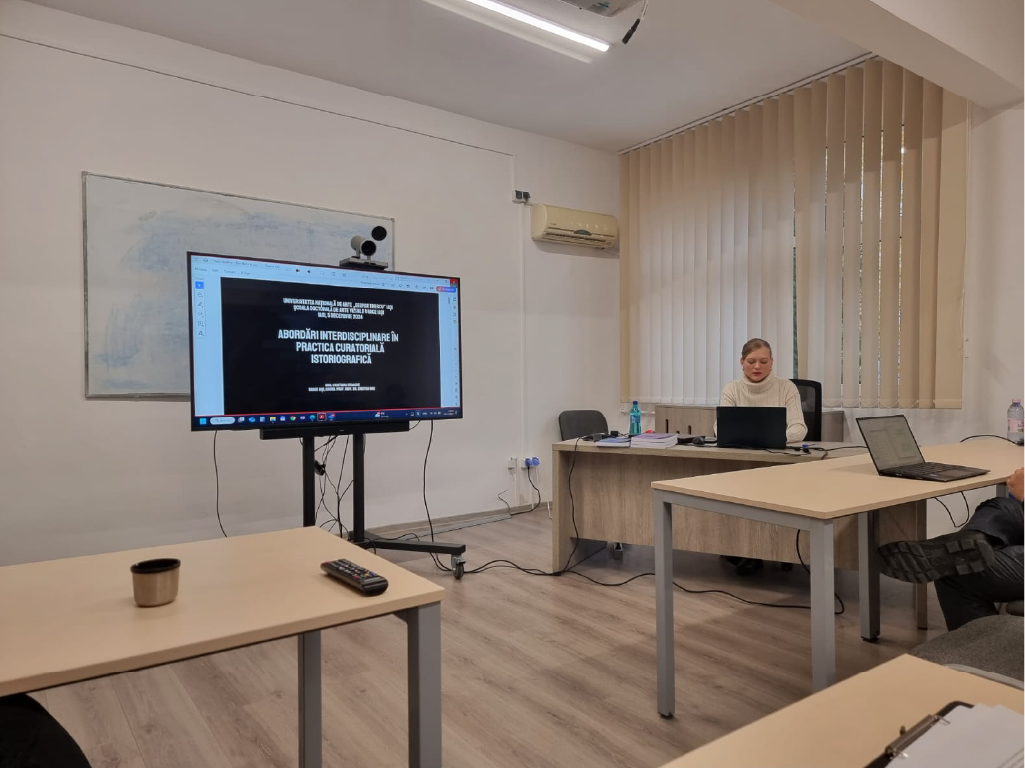
Keep scrolling
In the artistic domain, a series of questions are thus resurfacing, bearing new nuances: To what extent does creation still depend on the prior cultural foundation of the creator? How capable are we of identifying a solid cultural background behind contemporary works of art, whether they belong to the realm of visual arts, music, or performing arts? Does the demand for cultural depth still hold for artists, or should we accept the relaxation—perhaps to the point of dissolution—of what was once an essential criterion? How and to what extent do the new "technological cultures" affect the old "humanist cultures" that form the basis of what Europe and European spirituality represent today?
When transposed into the field of doctoral research, such questions retain their unsettling nature: Is doctoral research in the arts (also) a cultural act? How strongly should a cultural spirit permeate the pages of a completed thesis? What kinds of cultural experiences should an ideal doctoral student have during their research journey? What attitudes and cultural activities should doctoral supervisors promote to ensure that the results of their collaboration with students are also culturally significant? Are there tensions within a community between the academic and cultural environments, and if so, how might these tensions be described, quantified, or mitigated? Is the researcher a "man of culture," or has he, perhaps unknowingly, already transformed into a technician or craftsman following predetermined patterns and rituals, rendering his efforts predictable and stripped of the spectacle of a creative act?
When transposed into the field of doctoral research, such questions retain their unsettling nature: Is doctoral research in the arts (also) a cultural act? How strongly should a cultural spirit permeate the pages of a completed thesis? What kinds of cultural experiences should an ideal doctoral student have during their research journey? What attitudes and cultural activities should doctoral supervisors promote to ensure that the results of their collaboration with students are also culturally significant? Are there tensions within a community between the academic and cultural environments, and if so, how might these tensions be described, quantified, or mitigated? Is the researcher a "man of culture," or has he, perhaps unknowingly, already transformed into a technician or craftsman following predetermined patterns and rituals, rendering his efforts predictable and stripped of the spectacle of a creative act?
Explore More